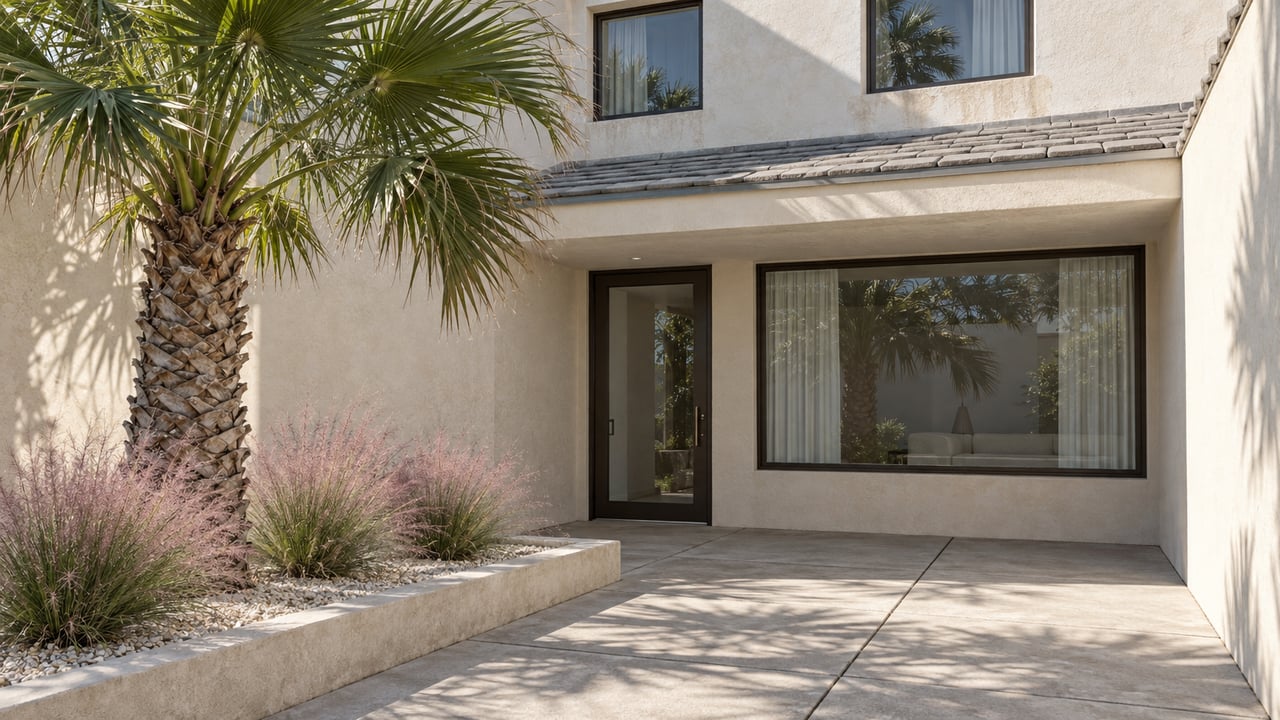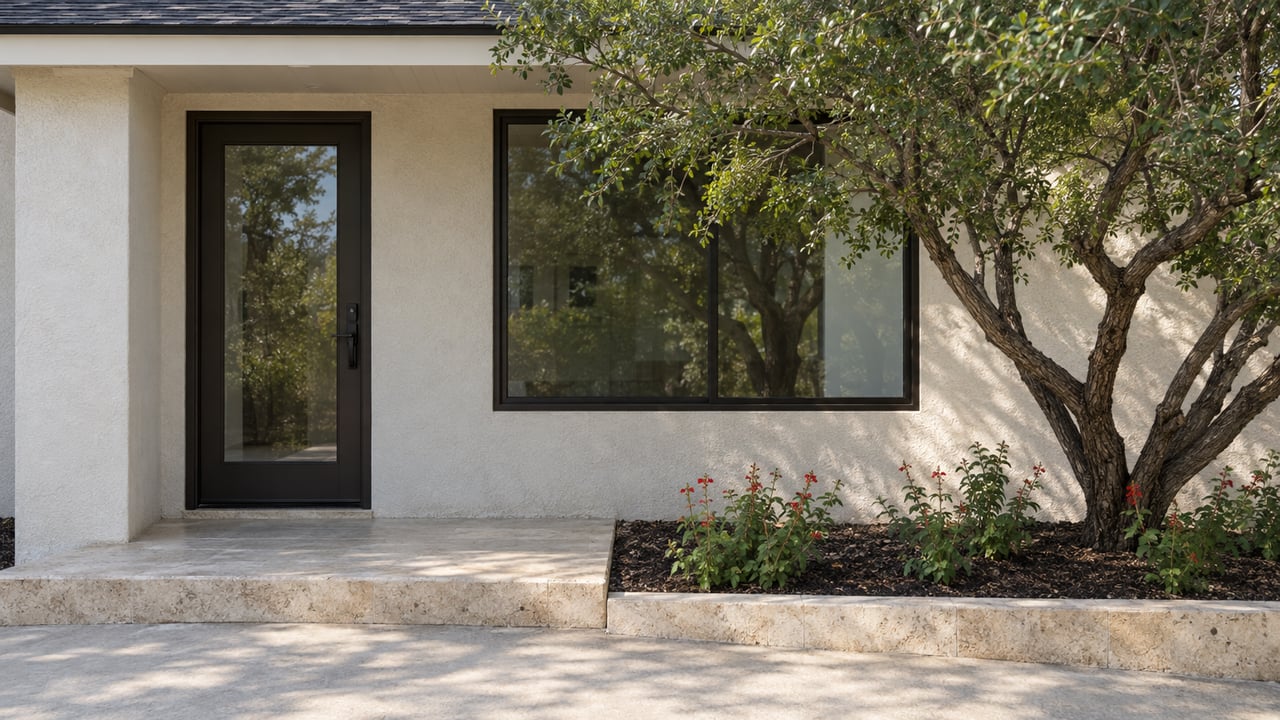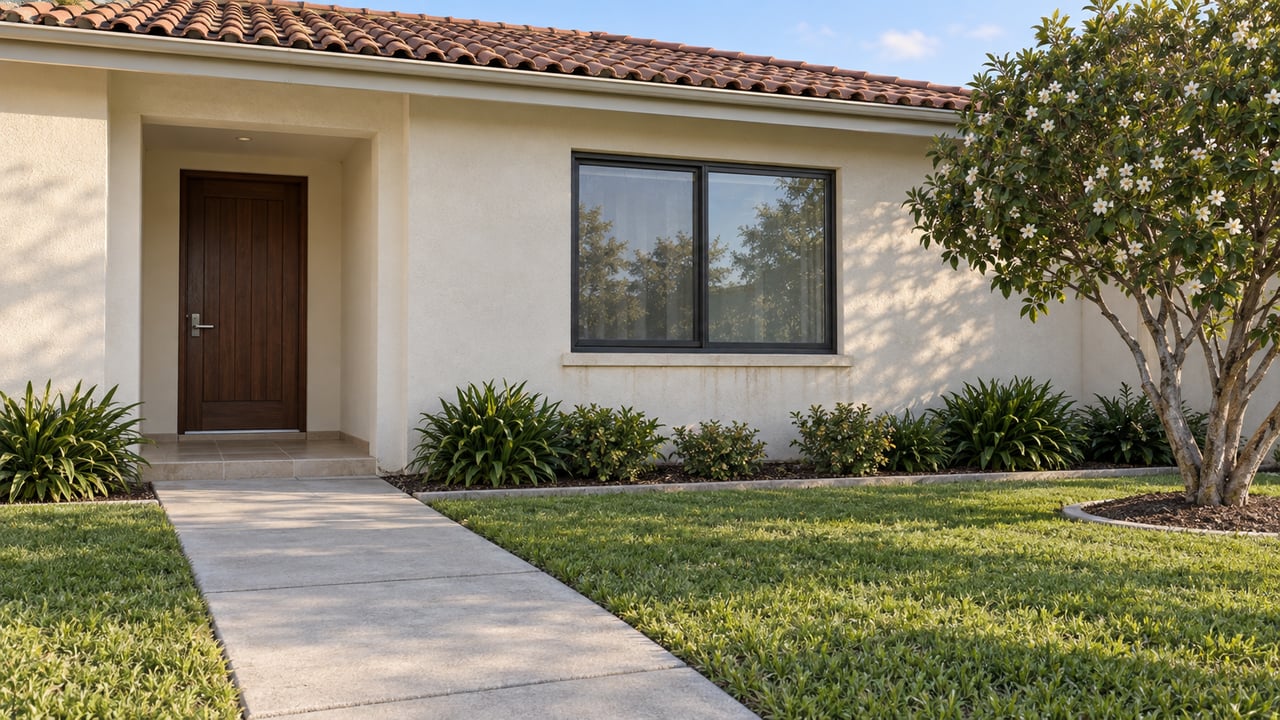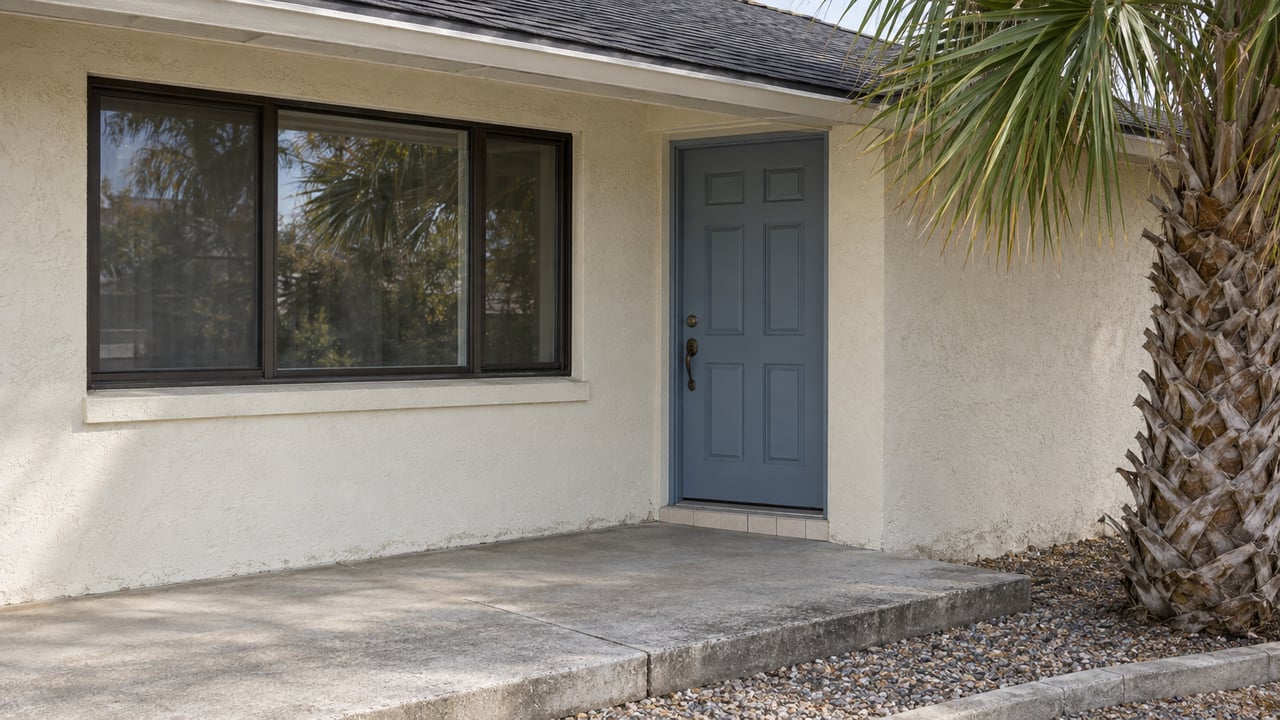
Pull two active Harlingen listings that sit within a few thousand dollars of each other. One is in Treasure Hills, the established golf-course community that Harlingen buyers have been asking about for years. The other is a few streets over in Agave Estates, a subdivision that did not exist five years ago. Both show up under the same search radius. Both land near the same asking price. A citywide median treats them as interchangeable data points in the same market. They are not.
That gap matters more than it looks like it should, because Harlingen's median is doing something medians are not built to do well: describing two different housing products with one number.
The Spread Hiding Inside One Median
Resideline tracked 274 closed sales in Harlingen over the trailing six months through September 2026, putting the median closing price at $240,000. That number on its own reads like a single, coherent market. The distribution underneath it does not. The middle half of those closings, the range that captures the bulk of ordinary transactions rather than the extremes, closed between $180,000 and $330,000. That is a $150,000 band sitting inside one city's median, and among the 127 Texas markets with a published spread in that dataset, Harlingen's band ranks 114th from the narrowest, meaning most comparable Texas cities cluster their sales more tightly than Harlingen does.
A spread that wide usually means one of two things: either the city has an unusually diverse mix of property conditions, or it has two distinct products being sold to two distinct buyers under one zip code. Harlingen has both, but the second explanation is the one a buyer can actually use.
Ninety-two percent of the closings in that six-month window were single-family houses, so this is not a story about condos or acreage skewing the numbers. It is a story about which single-family houses are selling, and where.
The New-Construction Wave Filling the Top Half
Search current Harlingen listings and a cluster of brand-new subdivisions shows up repeatedly: Agave Estates, described in its own listing copy as Harlingen's newest subdivision, Las Colinas of Treasure Hills, a newer high-end section being built adjacent to the established Treasure Hills name, along with Paso Real, Hidden Woods Subdivision Phase 2, and Pelican's Landing. Builders active in these subdivisions right now include J&L Builders LLC and Zarate Homes & Designs, both with multiple listings in progress as of this year.
The homes coming out of this wave run roughly 1,500 to 2,700 square feet based on current listings, with quartz countertops, foam insulation, tile flooring throughout, and builder warranties as standard features rather than upgrades. These are the listings that describe themselves as move-in ready in two weeks or built with a 2-10 warranty already attached. That combination of new systems, current finishes, and warranty coverage is exactly what tends to push a sale toward the top of the $180,000 to $330,000 band, and often above it.
The Established Side Anchoring the Bottom
The other end of that spread is held up by Harlingen's older, already-built neighborhoods. Treasure Hills itself is one of the areas most often cited as popular with Harlingen buyers, prized for its location near schools and shopping rather than for new construction. Fairway Grande, Country Club Terrace, and Waterwalk show up consistently on portal lists of Harlingen's most searched neighborhoods, and none of them are places where a buyer should expect quartz counters and a fresh warranty as the default. These are resale markets. The lots are established, the landscaping is mature, and the pricing reflects decades of ownership turnover rather than a builder's current cost sheet.
The interesting complication is that even a single neighborhood name can straddle both segments at once. Las Colinas of Treasure Hills is being marketed as a new, high-end section built inside or adjacent to a name that already means something older to longtime Harlingen buyers. Two listings can both say Treasure Hills and still represent completely different housing stock, built decades apart, priced by completely different logic.
What the Spread Actually Buys You
| Established resale stock | Current new-construction wave | |
|---|---|---|
| Representative subdivisions | Treasure Hills, Fairway Grande, Country Club Terrace, Waterwalk | Agave Estates, Las Colinas of Treasure Hills, Paso Real, Hidden Woods Subdivision Phase 2, Pelican's Landing |
| Who is selling | Individual owners, resale market | Regional builders including J&L Builders LLC and Zarate Homes & Designs |
| Typical size | Varies by lot and era | Roughly 1,500 to 2,700 square feet per current listings |
| Where it tends to land | Lower half of the $180,000 to $330,000 middle-half range | Upper half, frequently above the citywide $146 per square foot median |
Resideline's median sold price per square foot across those 274 tracked closings was $146, with the middle half landing between $119 and $166 per square foot. That $146 figure is a blend of both segments above, which is exactly why it should not be used to price an individual house. Run a 2,000 square foot new build through the citywide median rate and it implies a price around $292,000, well north of the $240,000 headline median. Run an older 2,000 square foot resale through the low end of that per-square-foot band and it implies something closer to $238,000. Same city, same square footage, a $54,000 gap driven almost entirely by which segment the house belongs to.
What This Means If You're Comparing Harlingen to Somewhere Else
Texas does not require sale prices to be part of the public record, which is part of why different sources report different Harlingen numbers depending on whether they are counting asking prices, appraised values, or tracked closings. That inconsistency is real, but it is not the most useful thing for a buyer to chase. The more useful question is not which portal's number is right. It is which segment a specific listing belongs to, because that answer explains the price better than any citywide figure will.
For the timeline figures, tracked Harlingen closings in the trailing six months through August 2026 took a median of 53 days to go from listed to under contract, then another 25 days from contract to closing, a combined timeline of roughly 78 days. That figure blends both segments too. A buyer targeting new construction is often working against a builder's completion schedule rather than a negotiation, while a buyer targeting an established Treasure Hills or Country Club Terrace resale is working within a more typical listing-to-offer cycle. Knowing which side of the spread a house sits on tells you more about what to expect from the process than the citywide median ever will.
If you are comparing Harlingen's numbers against another Rio Grande Valley town, the honest comparison is not median to median. It is asking which segment of each town's housing stock you are actually pricing against, because a $240,000 Harlingen median built from a mix of 1970s golf-course lots and 2026 builder inventory is not describing the same thing as a $240,000 median somewhere with a more uniform housing stock.
If you want help figuring out which side of that split a specific Harlingen listing falls on, and what that means for your offer, reach out to Maggie Bolado. Make every move the right one.